
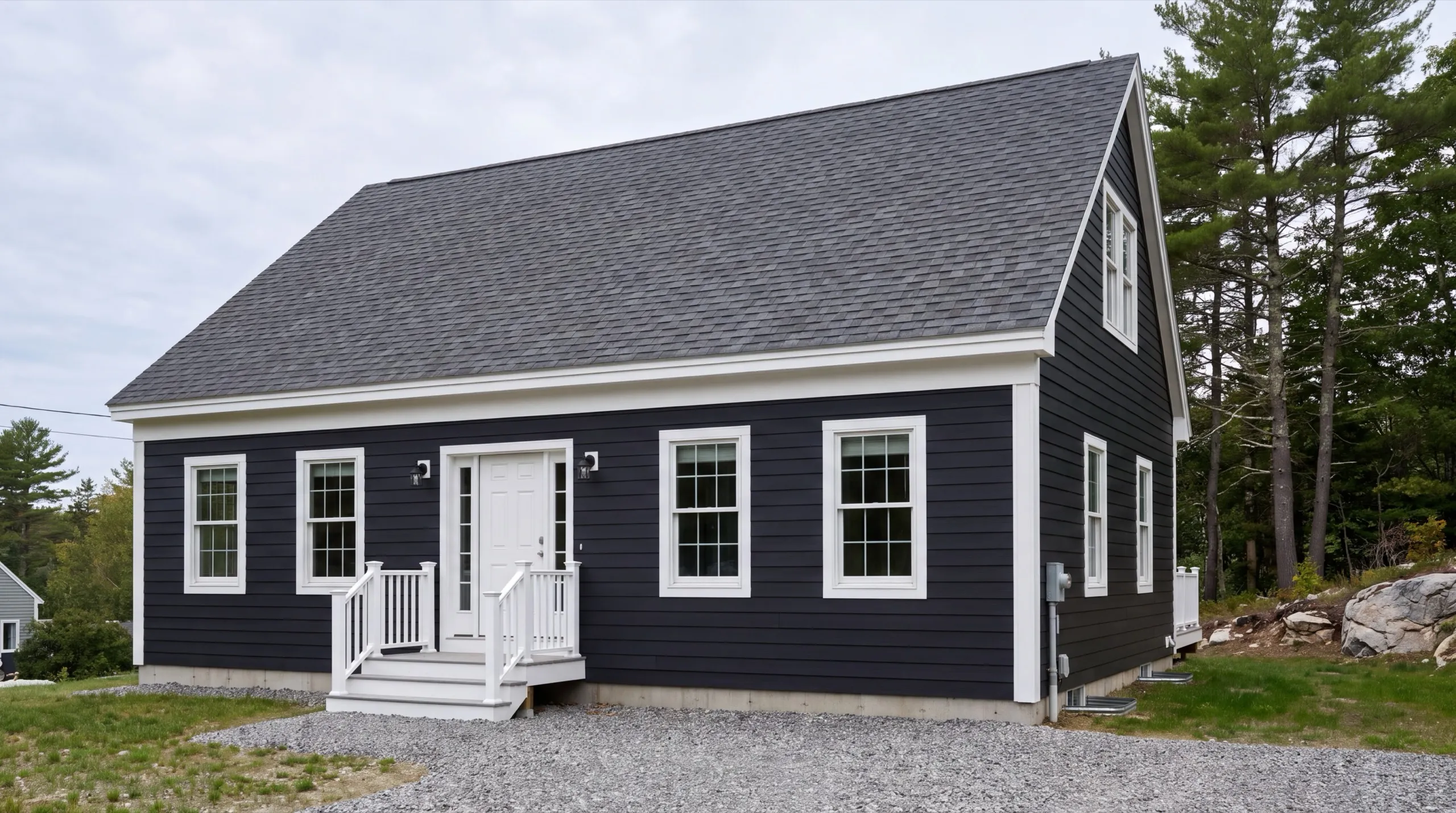
Get 3 vetted & insured Maine siding contractors. What's your project?
The cheapest siding quote usually covers whatever is already there. Be careful with that one.
We match you with three vetted contractors who inspect underneath first.
- 100% free for homeowners
- Same-day response before 5pm
- 10-step contractor vetting
The cheapest siding quote is usually the one that plans to hang new siding right over the old. It saves a day of labour, and it means nobody ever looked at the sheathing, the window flashing or the water barrier underneath.
Siding is the first layer, not the waterproofing. The barrier and flashing behind it do that work, and our climate tests them hard: snow packed against the lower courses for five months, ice dams pushing water back under the eaves, freeze-thaw on every fastener, salt air on the coast.
No license card exists for siding work, so screening stands in for one. We run a ten-step check on insurance, references, financial stability, work history and reputation, then introduce three contractors who quote the same scope. That introduction costs you nothing.
How do you hire a siding contractor safely?
- Ask whether the old siding is coming off and what happens if they find rot. That answer is the quote.
- Ask what goes behind the siding. Weather-resistant barrier and flashing details are the actual waterproofing.
- Get three quotes and check whether they include trim, fascia, soffit, and disposal. Those move between included and excluded constantly.
- Ask about lead-safe certification on a pre-1978 home.
- Confirm current insurance yourself, and read the dates.
- Get it in writing. Any job above $3,000 in labor and materials needs a written contract, and across most of our service area that is the law, not a preference. The Attorney General's consumer office publishes a free model contract.
- Watch the deposit. That same law caps the initial down payment at one-third of the contract price.
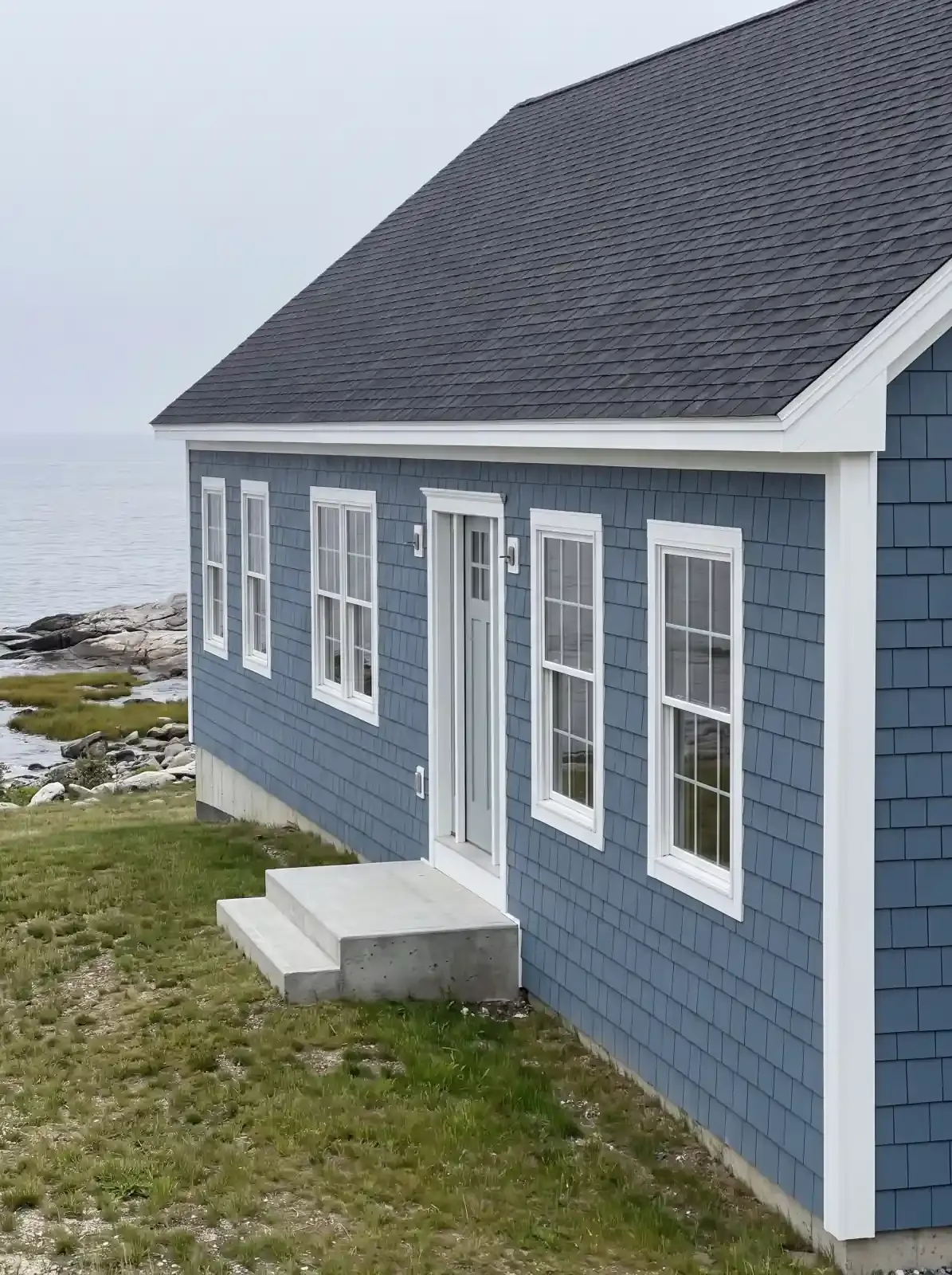
How much does siding cost?
Ranges from recent quotes across our network:
| Project | Range | Timeline |
|---|---|---|
| Partial re-siding or repair of one elevation | $10,000 – $25,000 | 1 – 2 weeks |
| Full replacement, vinyl, average home | $22,000 – $45,000 | 2 – 4 weeks |
| Full replacement, fiber cement or engineered wood | $40,000 – $80,000 | 3 – 5 weeks |
| Full replacement with trim, insulation, and repair work | $60,000 – $100,000+ | 4 – 7 weeks |
A GC's fee typically runs from 10% to 20% of the project cost.
Nobody can price what's under the old siding up front. A good quote includes an allowance for sheathing repair.
It also states a unit price for added work, so you already know the cost if the crew finds rot.
Full breakdown: what it costs to replace siding, line by line.
Other work our contractors do
Where do our siding contractors work?
Our siding contractors work across all 30 towns we cover. Exposure changes the specification considerably from one to the next.
A house on an exposed oceanfront road is a different job from an identical house ten miles inland.
- Portland, ME
- South Portland, ME
- Scarborough, ME
- Freeport, ME
- Biddeford, ME
- Sanford, ME
- Saco, ME
- Westbrook, ME
- Kennebunk, ME
- Windham, ME
- Gorham, ME
- York, ME
- Falmouth, ME
- Wells, ME
- Standish, ME
- Kittery, ME
- Cape Elizabeth, ME
- Old Orchard Beach, ME
- Augusta, ME
- Belgrade, ME
- Bangor, ME
- Lewiston, ME
- Auburn, ME
- Sidney, ME
- Waterville, ME
- Skowhegan, ME
- Conway, NH
- Rochester, NH
- Dover, NH
- Portsmouth, NH
What happens when you side over old siding?
There's a real temptation on a siding job because it looks cheaper on paper: leave the old siding up, then install the new siding over it.
Sometimes that's legitimate. Often it isn't.
Here's why.
Siding doesn't keep water out of your house. The weather-resistant barrier and the flashing underneath do that.
Siding takes the first hit. The assembly behind it is the actual system.
Install over old siding and nobody sees that assembly. The sheathing may be soft.
A window may never have been flashed properly. Water could have been entering behind a corner for six years.
New siding hides those problems; it doesn't stop them. You'll find them later, when they cost much more to repair.
In a cold, wet, coastal climate that matters more than in most places. Freeze-thaw drives water into any gap, ice dams push it uphill under the eaves, and driven rain off the ocean finds any detail installed to the minimum. Our climate is unusually good at finding a bad wall assembly.
The first question about a siding quote isn't the material. Ask: are you taking the old siding off, and what happens if you find rot? A builder who explains how added repairs are priced is quoting the real job.
Three kinds of calls.
Something's visibly wrong. Rot, soft spots, peeling paint that won't hold, storm damage, or pest damage.
The maintenance has become the problem. A wood-sided house that needs painting every five years eventually prompts a conversation about materials that don't.
It's part of something bigger. Siding often goes on at the same time as windows, insulation, or an addition, and doing them together is meaningfully cheaper than doing them separately.
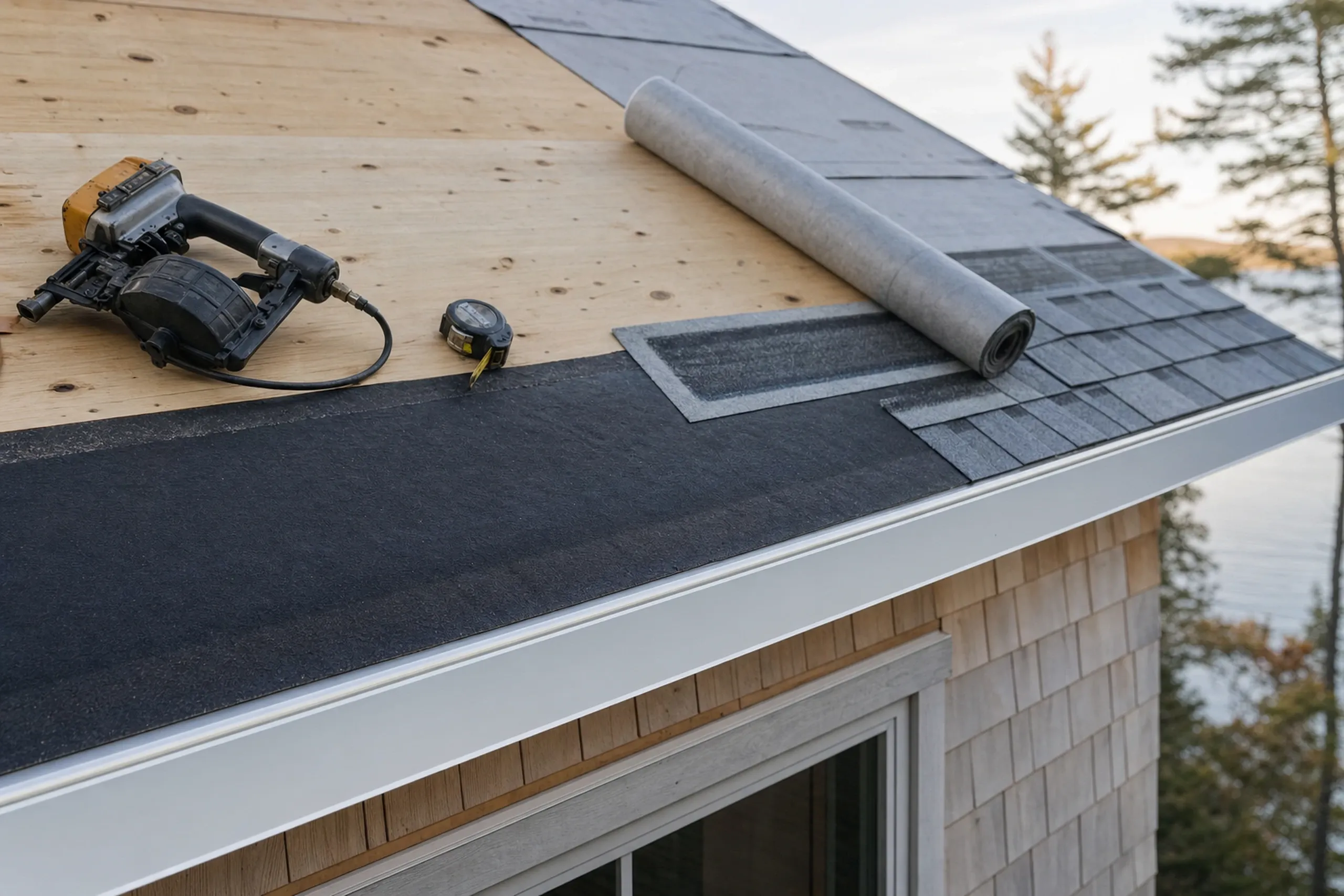
The quote should cover removal and disposal of the old siding. It should include inspection and repair of the sheathing, followed by a weather-resistant barrier and flashing at every opening or transition.
Then come the siding and trim. Fascia and soffit work should be included where required.
Material choices for a cold, wet climate:
Vinyl. Least expensive, no painting, and it performs adequately. It can crack in deep cold and it's the least convincing on an older or higher-value home.
Fiber cement. Durable, holds paint well, handles freeze-thaw and fire, and stands up to coastal exposure. Heavier and more labor to install, which shows in the price.
Engineered wood. Lighter than fiber cement, easier to work, good looking. Performance depends heavily on the detailing at cut ends and grade.
Cedar and natural wood. The best looking and the highest maintenance. On a historic home it's frequently the right answer and sometimes the only approvable one in a review district.
Exposure matters as much as material. On an ocean-facing elevation, the fasteners need to resist corrosion.
The finish system matters just as much as the cladding itself.
Siding is warm-weather work. Most manufacturers have temperature requirements for installation, sealants and caulk have application ranges, and painting has its own window.
Realistically, the season runs from May through October, though the shoulders depend on the year. It's short.
Good crews book early, so call in winter for summer work.
A siding project has one practical advantage over a remodel: the house stays closed in for most of the work, so you can live there comfortably.
A cold, coastal climate is a stress test on siding.
Snow and ice sit against the lower courses for five months. Ice dams push water back under the eaves.
Every joint and fastener goes through freeze-thaw cycles. On the coast, there's driven rain and salt.
The south elevation takes UV through a long summer.
An assembly that's adequate in a temperate climate is marginal here. And marginal fails.
And the licensing fact: no state license exists for general contractors or builders where we work, only for plumbers and electricians. No siding contractor license exists to check. Insurance, references, financial stability, and reputation do, and our 10-step process checks them.
One real credential: on a home built before 1978, removing old siding disturbs painted surfaces and falls under lead-safe certified work practices. That's federal and verifiable, and on an older house you should ask.
The 10-step vetting process
company, crew size, service area, project types, capacity, pricing posture.
years in business, structure, ability to carry materials and labor, supplier payment history.
general liability and workers' comp certificates pulled and stored.
past homeowners, subs, and suppliers. Minimum three, not only the ones they pick.
Google, Facebook, BBB, local word of mouth, complaint and dispute search.
completed work, in person or in detailed photo and video.
speed of reply, clarity of writing, handling of a difficult question.
Contractor agreement signed
first projects watched closely, homeowner feedback gathered actively.
underperformers come out of the network.
What else do people ask about hiring a siding contractor?
Can I put new siding over old siding?
Sometimes, but it means nobody inspected the sheathing or the flashing underneath. On an older home that's a real risk.
What's the best siding for hard winters?
Fiber cement and engineered wood both perform well in freeze-thaw. Vinyl is the budget option and can crack in deep cold. Cedar looks best and needs the most maintenance.
How long does siding replacement take?
Typically 2 to 5 weeks depending on size, material, and how much repair is found underneath.
Do siding contractors need a license?
No. Plumbers and electricians get licensed; siding contractors do not. Lead-safe certification is federal and worth verifying on a pre-1978 home.
Does Seth's Home Pros install siding?
No. We're not a contractor. We make the introduction and the contract is between you and the installer.
Ready for three quotes from vetted siding contractors?
Tell us about the house and the town. Include how exposed it is.