
Building or Remodeling in Maine? Put Radon in the Plan Before the Walls Close
Most people planning a build or a remodel have a long list: layout, budget, windows, the kitchen. Radon is rarely on it.
In Maine it should be, because the cheapest time to deal with it is before the concrete is poured and the drywall goes up.
I run York PA Radon Pros in York County, Pennsylvania, one of the highest radon areas in the country. Most of my work is vetting the companies that handle radon, and many of the problem houses I hear about had construction work done without anyone thinking about it.
Maine has the same geology working against it, and then some.
When you are ready to line up builders, we match Maine homeowners with three contractors for a new build or a remodel, including general contractors around Portland. Free, and no obligation to hire any of them.
Is radon a problem everywhere in Maine?
Yes. The Maine CDC reports that at least 25 percent of tested homes in every region of the state have a radon problem.
It isn't a coastal problem or a northern problem. Radon comes from uranium in bedrock, and Maine is full of granite.
That granite puts radon in well water too, which matters if you're building on a rural lot.
A U.S. Geological Survey study of private bedrock wells in central Maine found that 29 percent of samples exceeded 4,000 pCi/L, the level the Maine CDC uses as its guideline for radon in water.
The wells nearest granite formations ran highest.
What does Maine's building code require for new homes?
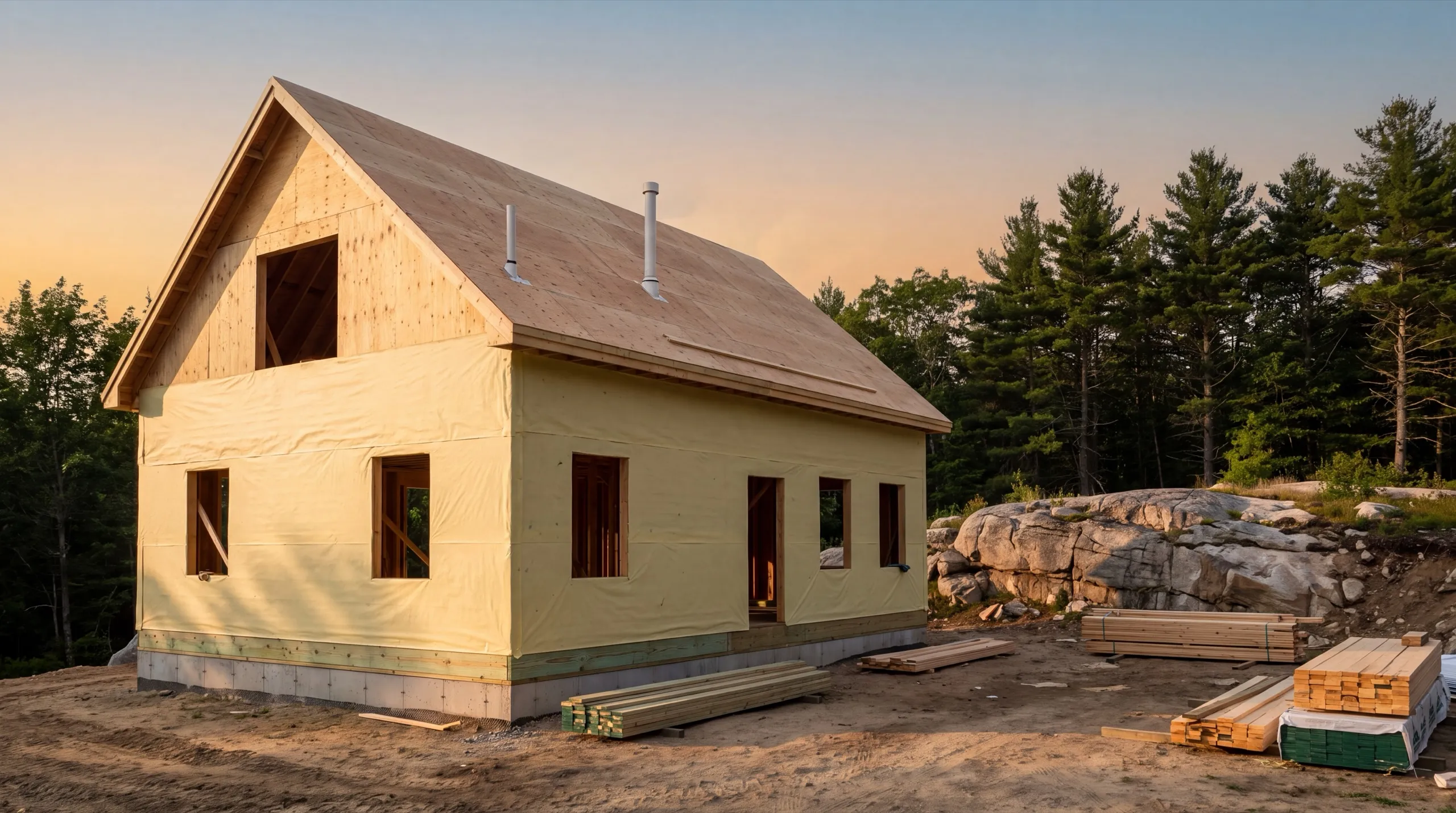
If you're building new, some of this is already handled. Maine's Uniform Building and Energy Code requires radon-resistant construction in new low-rise homes.
The passive system has three parts:
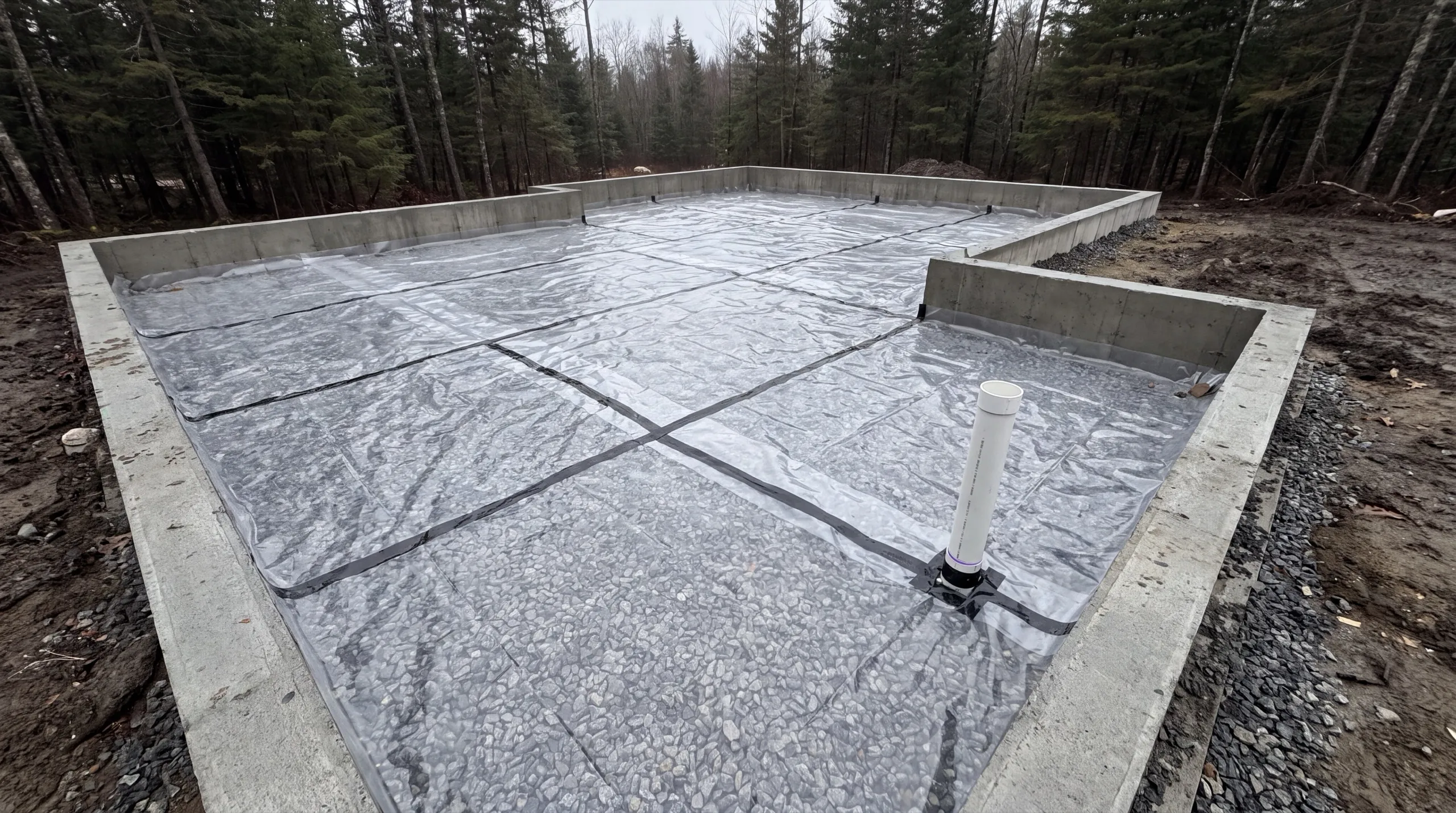
- Under the slab: about four inches of crushed stone so soil gas has somewhere to collect, with a 6-mil plastic vapor barrier over it, under the concrete.
- A sealed floor, either the poured slab or, in a crawl space, a sealed plastic membrane.
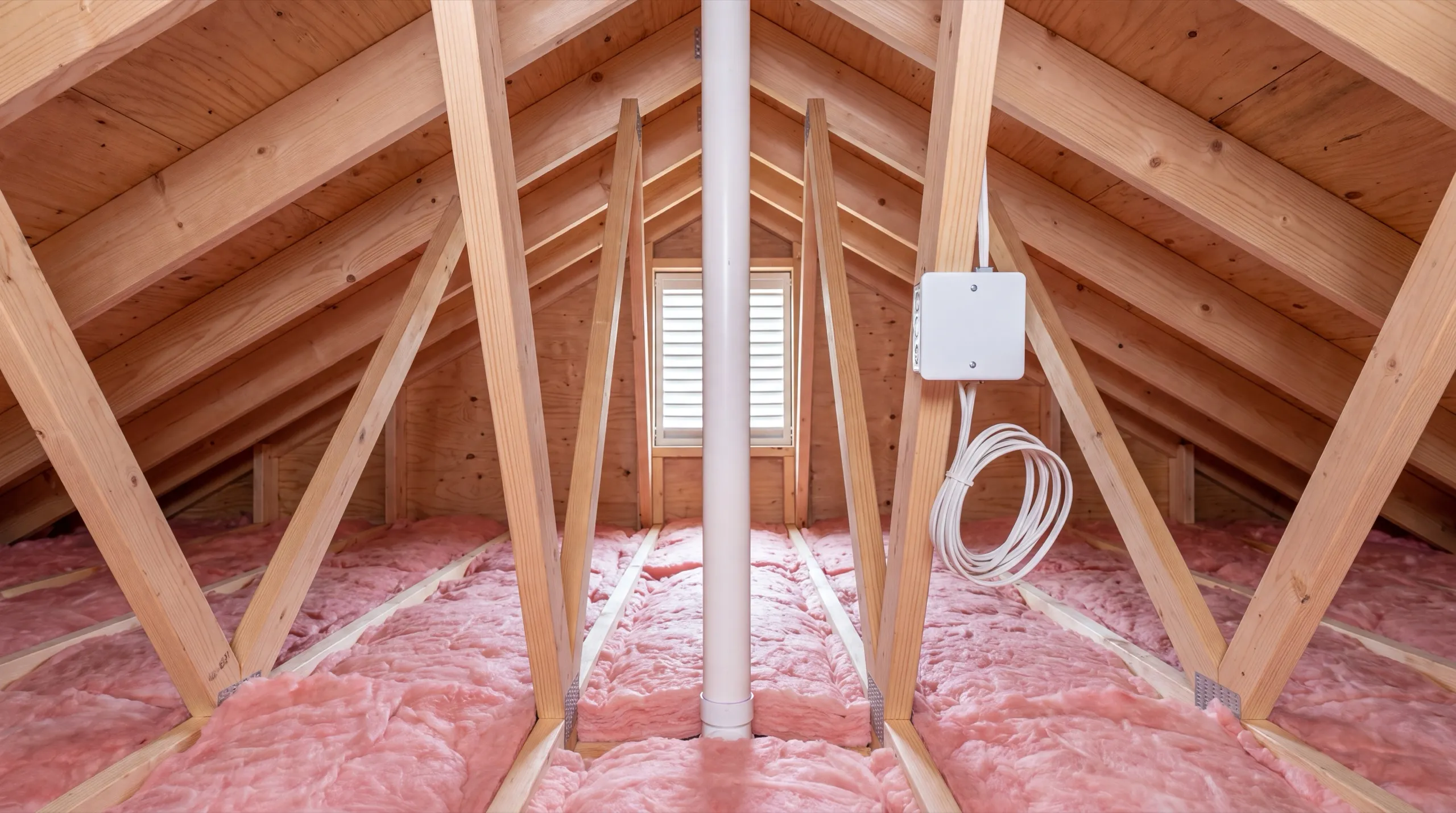
- A vent pipe and an attic box: 3- or 4-inch PVC or ABS running from under the slab up through the house and out above the roof, plus an electrical box in the attic near the pipe so a fan can go in later if it's needed.
The stone and barrier are the cheap part, and they only go in once. After the pour, they are buried under the slab.
What if nobody in your town inspects?
There are two catches. Towns under 4,000 people don't have to enforce the code, but it still applies statewide.
If nobody in your town inspects, it's on you and your builder to make sure the system goes in.
And a passive system isn't a guarantee. Test after you move in.
If the result is 4.0 pCi/L or higher, a fan added to the pipe that's already there usually fixes it for far less than a retrofit.
When you're comparing builder quotes, ask each one how they handle the radon rough-in and whether the price includes the attic outlet. A builder who answers without hesitating has done it before.
More questions worth asking every builder are on our questions to ask a contractor page.
Can a remodel or addition make radon worse?
In existing homes, radon trouble tends to show up after the work, not before it.
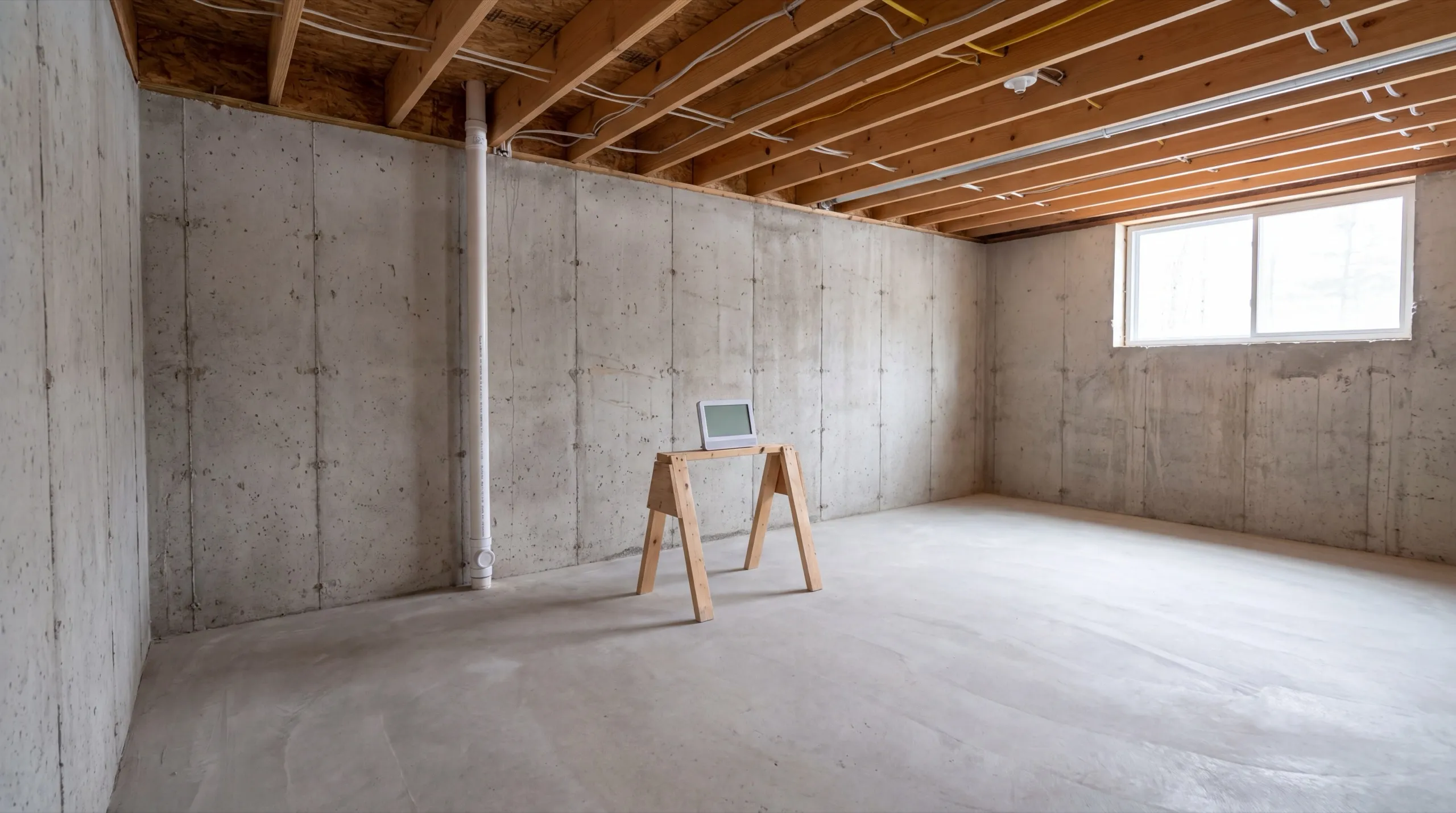
Finishing a basement turns storage space into living space where people spend hours a day. A bedroom added over a slab or crawl space opens new entry points for soil gas.
Air sealing and new windows tighten the house, so whatever gets in stays longer. Even a new furnace or bath fan shifts the air pressure inside.
None of that is a reason to skip the project. It's a reason to test.
Should you test before and after the work?
Run one test before you start and one after you finish.
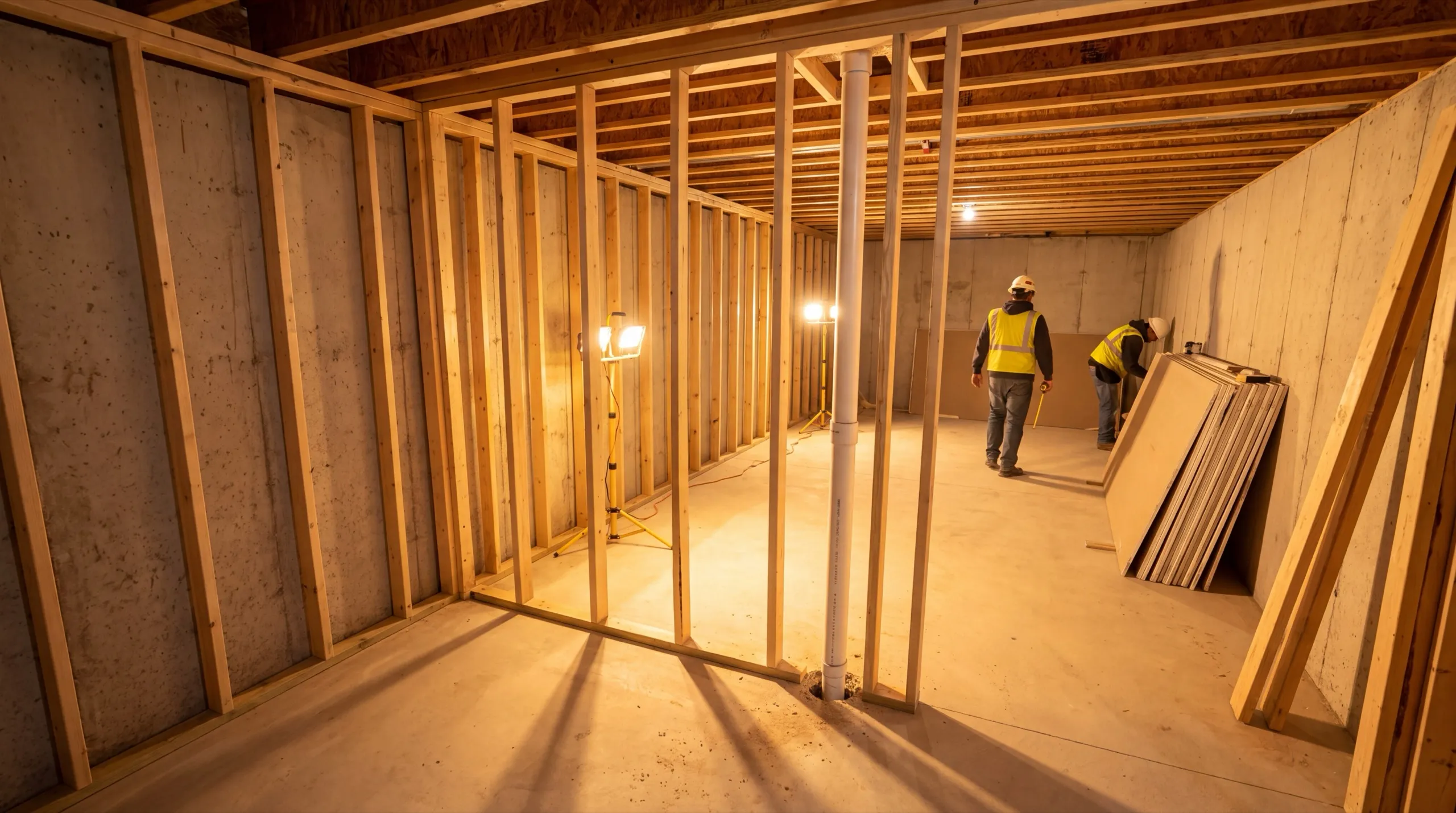
For a basement, the first test tells you whether to plan for mitigation while the walls are still open. That is a much easier job than cutting into new drywall later.
If you're pricing a basement finish, add the radon test to the list before anyone starts framing.
Do you need to test well water for radon?
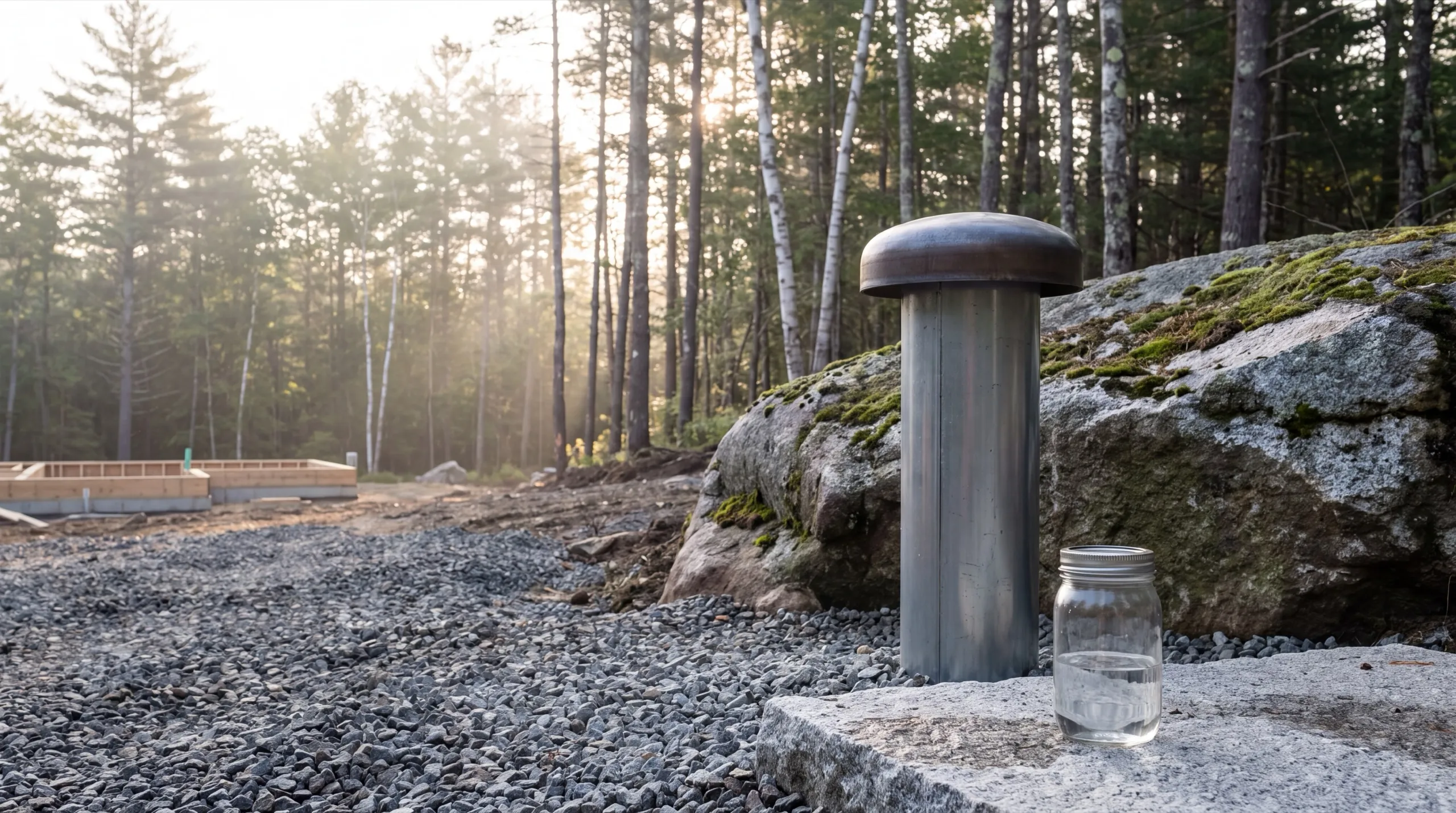
Maine CDC recommends private well owners test for radon every three to five years. Radon in water mostly reaches your lungs, not your stomach, because it releases into the air when you shower, run the dishwasher or do laundry.
Maine uses 4,000 pCi/L as its guideline, and the state says treatment is strongly advisable around 10,000.
A water system is a separate job from an air system, with its own equipment and costs. Some radon companies handle both, and many don't, so ask before you hire.
If you're drilling a well on a new lot, test the water as soon as it's running.
Do you have to test an ADU you plan to rent?
Maine requires landlords to test rental units for radon, give tenants the results in writing, and report them to the state.
If a test comes back at 4.0 pCi/L or higher, either the landlord or the tenant can end the lease with 30 days' notice, unless the landlord fixes the problem. The state's rental radon FAQ lays out the details.
If you're adding an accessory dwelling unit to rent out, radon testing comes with the territory.
How do you hire a registered radon pro in Maine?
Maine doesn't license general contractors, which we cover in the licensing gap and what fills it. It does regulate radon work.
Under the Maine Radon Registration Act, anyone who tests for radon or designs or installs a radon system has to be registered with the state.
Homeowners can work on their own house, but not when it's being sold. Home-sale tests have to come from a registered tester.
Vetting radon contractors is what I do. I founded York PA Radon Pros to vet radon mitigation companies in York, PA, and the questions carry over to Maine:
- Are you registered with the Maine radon program? Ask for the registration and confirm it with the state.
- Will you inspect the house before you quote? A price over the phone is a guess.
- Does the price include a test after the system is running? That test is the only proof the job worked.
Frequently asked questions about radon in Maine
Does Maine require radon-resistant construction in new homes? Yes. The Maine Uniform Building and Energy Code requires a passive radon system in new low-rise homes, and it applies statewide even in towns that don't enforce the code.
What radon level means I should act? The level Maine's rental law uses is 4.0 pCi/L in air. For well water, Maine's guideline is 4,000 pCi/L.
Do I need a radon test if I'm only remodeling the kitchen? Not for the kitchen itself. But if the work changes airflow, adds a room over a slab, or finishes a basement, test before and after.
Why put radon on the plan now?
Radon is one of the few house problems that gets cheaper the earlier you deal with it. A pipe roughed in during framing, or a test run before the drywall goes up, beats a retrofit every time.
It belongs on the same list as the windows and the cabinets.
Planning a build or a remodel in Maine? Tell us what you're building and what town you're in, and we'll put three contractors in front of you.
Bring the radon questions above to every quote.
More on hiring: hiring a builder in Maine, step by step